C++ 基础入门 - 第五章
前面我们学过变量、函数、数组、字符串、引用和指针。到这里,你会慢慢发现一个问题。现实世界里的数据,往往不是单独一个 int、一个 double、一个 string 就能说清楚的。比如一个学生,至少会有姓名、年龄、成绩。比如一本书,至少会有书名、作者、价格。比如游戏里的角色,至少会有名字、血量、攻击力和坐标。这时候,如果还把这些信息拆成一堆零散变量,代码就会越来越乱。于是 C++ 说,别急,我们可以自己“造类型”。
这就是这一章的主角。
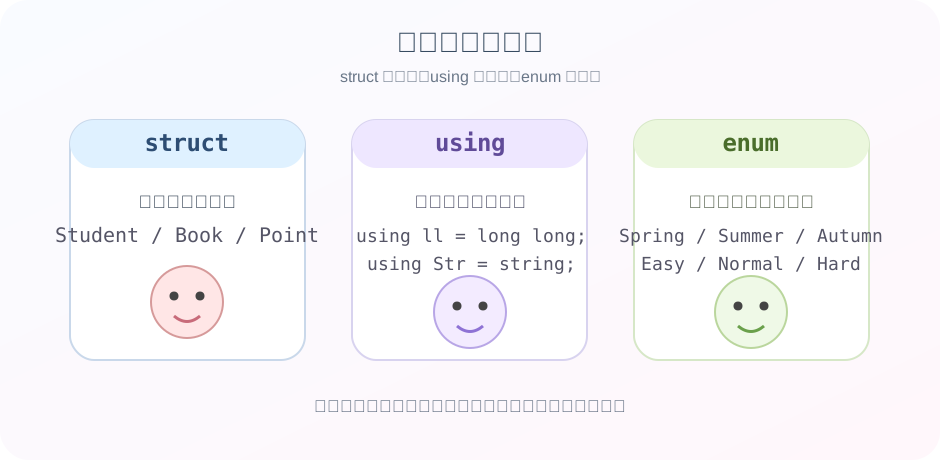
struct让你把多个相关数据打包在一起。using让你给类型起一个更顺手的名字。enum让你优雅地表示有限个状态或选项。
换句话说,这一章开始,你写的代码不只是“在用类型”,而是开始“设计类型”了。
为什么需要结构体
先看一个很常见的场景。 我们要记录一个学生的信息。 如果不用结构体,可能会这样写。
#include <iostream>
#include <string>
using namespace std;

int main() {
    string studentName = "Alice";
    int studentAge = 18;
    double studentScore = 95.5;

    cout << studentName << " " << studentAge << " " << studentScore << endl;
    return 0;
}
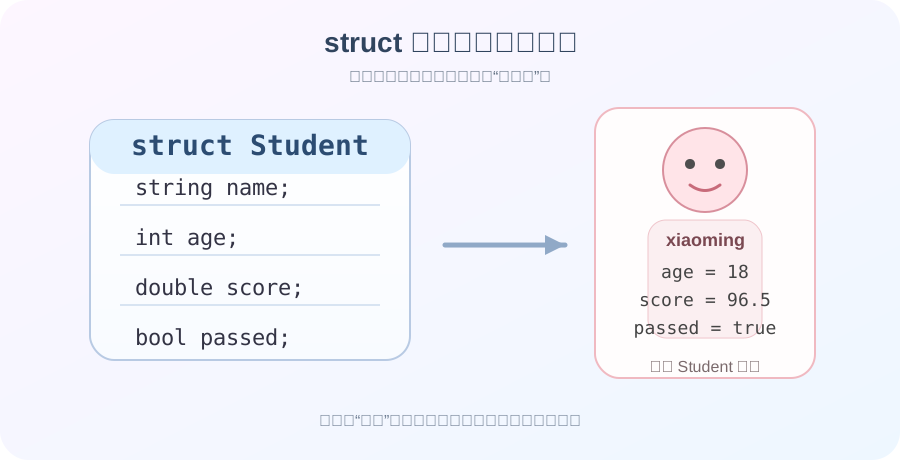
这段代码现在看起来还好,但如果学生变成 30 个、300 个,或者还要记录班级、手机号、是否及格,变量会很快多到你自己都看不下去。 所以我们需要一个“盒子”,把属于同一个对象的数据装到一起。
这个盒子,就是结构体。
什么是 struct
struct 是 structure 的缩写,可以理解成“结构”或者“组合好的数据类型”。
它允许你把多个成员变量放在一起,组成一个新的类型。
最基础的写法如下。
#include <iostream>
#include <string>
using namespace std;

struct Student {
    string name;
    int age;
    double score;
};
这里有几个关键点。
Student是你自己定义出来的新类型。- 花括号里面的
name、age、score是这个类型的成员。 - 最后别忘了分号。
结构体变量
结构体变量的创建和使用
定义好类型之后,就可以像使用普通变量那样,创建结构体变量。
#include <iostream>
#include <string>
using namespace std;

struct Student {
    string name;
    int age;
    double score;
};

int main() {
    Student s1;

    s1.name = "Alice";
    s1.age = 18;
    s1.score = 95.5;

    cout << s1.name << endl;
    cout << s1.age << endl;
    cout << s1.score << endl;

    return 0;
}
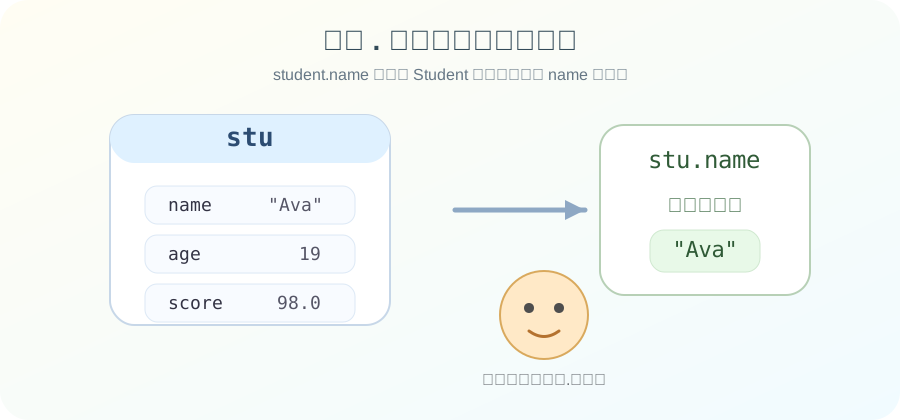
这里的 s1 就是一个 Student 类型的变量。
访问结构体成员时,要使用点号 .。
格式就是:
变量名.成员名比如 s1.name、s1.age、s1.score。
用初始化的方式创建结构体变量
除了先创建再赋值,还可以在创建的时候直接给出初始值。
#include <iostream>
#include <string>
using namespace std;

struct Student {
    string name;
    int age;
    double score;
};

int main() {
    Student s1 = {"Alice", 18, 95.5};
    Student s2 = {"Bob", 19, 88.0};

    cout << s1.name << " " << s1.score << endl;
    cout << s2.name << " " << s2.score << endl;

    return 0;
}
这种写法很适合快速创建对象。 不过要注意,花括号里的顺序,要和结构体成员声明的顺序一致。 如果你把顺序写乱了,程序未必报错,但含义可能已经悄悄跑偏了。
来一个更完整的例子
我们写一个学生信息展示程序。
#include <iostream>
#include <string>
using namespace std;

struct Student {
    string name;
    int age;
    double score;
};

int main() {
    Student stu = {"Luna", 18, 97.5};

    cout << "学生姓名: " << stu.name << endl;
    cout << "年龄: " << stu.age << endl;
    cout << "成绩: " << stu.score << endl;

    if (stu.score >= 60) {
        cout << "结果: 及格" << endl;
    } else {
        cout << "结果: 不及格" << endl;
    }

    return 0;
}
这个例子说明了一件事。
结构体不是拿来“替代变量”的,它是帮你把数据组织得更清楚。真正用起来时,它仍然会和 if、for、函数这些知识一起配合。
结构体数组
前面学过数组。现在把数组和结构体结合起来,代码立刻变得实用了很多。
#include <iostream>
#include <string>
using namespace std;

struct Student {
    string name;
    int age;
    double score;
};

int main() {
    Student students[3] = {
        {"Alice", 18, 95.5},
        {"Bob", 19, 88.0},
        {"Cindy", 18, 91.0}
    };

    for (int i = 0; i < 3; i++) {
        cout << students[i].name << " "
             << students[i].age << " "
             << students[i].score << endl;
    }

    return 0;
}
这里的 students 是一个数组,数组里的每个元素都是 Student 类型。
所以 students[i].name 的意思就是:
先取出第 i 个学生,再访问这个学生的 name 成员。
这已经非常接近很多真实程序的数据组织方式了。
结构体与函数
结构体也可以作为函数参数
结构体最大的价值之一,就是可以被函数直接拿来传递。 比如我们写一个专门打印学生信息的函数。
#include <iostream>
#include <string>
using namespace std;

struct Student {
    string name;
    int age;
    double score;
};

void printStudent(Student s) {
    cout << "姓名: " << s.name << endl;
    cout << "年龄: " << s.age << endl;
    cout << "成绩: " << s.score << endl;
}

int main() {
    Student stu = {"Mika", 20, 93.5};
    printStudent(stu);
    return 0;
}
这样做的好处很明显。
你不需要把 name、age、score 一项一项传进去,直接把整个学生对象交给函数就行。
这会让函数的接口更清晰,也更贴近现实含义。
引用传递结构体
上面的写法虽然直观,但它会把整个结构体复制一份给函数。 当结构体很大时,这样会有额外开销。于是我们通常会用引用来传递。
#include <iostream>
#include <string>
using namespace std;

struct Student {
    string name;
    int age;
    double score;
};

void printStudent(const Student& s) {
    cout << "姓名: " << s.name << endl;
    cout << "年龄: " << s.age << endl;
    cout << "成绩: " << s.score << endl;
}

int main() {
    Student stu = {"Nora", 19, 90.0};
    printStudent(stu);
    return 0;
}
这里的 const Student& s 可以拆开理解。
Student&表示按引用传递,不复制整个对象。const表示这个函数只读,不会修改它。
这是一种非常常见、也非常推荐的写法。
函数也可以返回结构体
不仅可以传进去,还可以返回出来。
#include <iostream>
#include <string>
using namespace std;

struct Point {
    int x;
    int y;
};

Point createPoint(int a, int b) {
    Point p;
    p.x = a;
    p.y = b;
    return p;
}

int main() {
    Point p1 = createPoint(3, 5);
    cout << p1.x << ", " << p1.y << endl;
    return 0;
}
这就像函数帮你“生产”了一个对象,再把它交回来。 很多程序都会这样组织数据。
结构体里可以放什么成员
结构体成员可以是各种类型。 你已经学过的大部分基础类型,都可以放进去。
struct Player {
    string name;
    int hp;
    double attack;
    bool alive;
};
甚至结构体成员还可以是数组。
struct Team {
    string name;
    int scores[3];
};
以后你还会学到,结构体里甚至可以放更复杂的类型,比如别的结构体、类、容器等等。
结构体嵌套结构体
这是非常实用的一个技巧。
比如一个学生不仅有自己的信息,还有地址信息。那地址本身也可以定义成一个结构体。
#include <iostream>
#include <string>
using namespace std;

struct Address {
    string city;
    string street;
};

struct Student {
    string name;
    int age;
    Address addr;
};

int main() {
    Student stu = {"Alice", 18, {"Shanghai", "Nanjing Road"}};

    cout << stu.name << endl;
    cout << stu.addr.city << endl;
    cout << stu.addr.street << endl;

    return 0;
}
这里 stu.addr.city 读起来其实很自然。
先找到学生的地址,再找到地址里的城市。
这说明点号不仅能用一次,还能一层一层往下走。
struct 和 class
后面会学到 class。很多人到这里都会问,那 struct 和 class 到底啥关系。
先给你一个初学者阶段完全够用的理解。
- 它们都能定义自定义类型。
- 它们都能有成员。
在当前阶段,可以先把 struct 看成更适合入门的数据打包工具。
等后面学面向对象时,再系统进入 class 的世界。
现在不需要把它们的所有差异一次性吃透,先会用 struct 才是关键。
自定义类型不只有 struct
到了这里,C++ 会很认真地对你说一句。
你不只能用系统给你的类型,你也可以给自己造顺手的名字,造更贴合场景的表达方式。
这就轮到 using 和 enum 出场了。
using,给类型起别名
有些类型名字很长,或者你想让代码更符合业务语义,这时可以使用 using。
#include <iostream>
#include <string>
using namespace std;

using ll = long long;
using Str = string;

int main() {
    ll a = 123456789;
    Str name = "C++ Learner";

    cout << a << endl;
    cout << name << endl;
    return 0;
}
这里的意思是:
以后看到 ll,就把它理解成 long long。
看到 Str,就把它理解成 string。
这不会创造一个全新的底层类型,它只是给原来的类型起了一个别名。就和python中的import numpy as np的效果差不多。
为什么 using 有用
先看一个没有别名的版本。
long long totalScore = 0;
long long maxValue = 1000000000;
再看用了别名之后。
using ll = long long;

ll totalScore = 0;
ll maxValue = 1000000000;
这段代码是不是更干净了。 在复杂项目里,别名不仅能让代码更短,还能让含义更清楚。
比如:
using StudentCount = int;
using Price = double;
using Name = string;
虽然底层还是原来的类型,但读代码的人会更容易明白这个变量在扮演什么角色。
enum,有限个选项
有些数据不是任意变化的,而是只能从几个固定值里选。
比如星期、季节、游戏难度、红绿灯状态。
这种场景下,enum 就很合适。
#include <iostream>
using namespace std;

enum Color {
    RED,
    YELLOW,
    GREEN
};

int main() {
    Color light = GREEN;

    if (light == GREEN) {
        cout << "可以通行" << endl;
    }

    return 0;
}
这里的 Color 是一个枚举类型。
它的可选值有 RED、YELLOW、GREEN。
这样写的好处是,程序含义很直观。你不会拿一个神秘的数字 2 去猜它到底代表什么状态。
用枚举写一个游戏难度例子
#include <iostream>
using namespace std;

enum Difficulty {
    EASY,
    NORMAL,
    HARD
};

int main() {
    Difficulty level = HARD;

    if (level == EASY) {
        cout << "简单模式" << endl;
    } else if (level == NORMAL) {
        cout << "普通模式" << endl;
    } else {
        cout << "困难模式" << endl;
    }

    return 0;
}
这段代码的重点不是功能有多复杂,而是表达更清晰了。
level = HARD 一眼就知道意思。
要是写成 level = 2,你还得先回忆 2 到底对应谁。
struct、using、enum 怎么一起配合
它们经常不是单独使用,而是一起出现。 比如写一个游戏角色结构体。
#include <iostream>
#include <string>
using namespace std;

using Str = string;

enum RoleType {
    WARRIOR,
    MAGE,
    ARCHER
};

struct Player {
    Str name;
    int hp;
    RoleType role;
};

int main() {
    Player p = {"Aria", 100, MAGE};

    cout << "名字: " << p.name << endl;
    cout << "血量: " << p.hp << endl;

    if (p.role == WARRIOR) {
        cout << "职业: 战士" << endl;
    } else if (p.role == MAGE) {
        cout << "职业: 法师" << endl;
    } else {
        cout << "职业: 弓箭手" << endl;
    }

    return 0;
}
这里很典型。
using 让类型名更简洁。
enum 让职业状态更清楚。
struct 把一个玩家需要的信息打包起来。
这就是“自定义类型”的真正魅力。你开始不是在凑语法,而是在设计程序里的世界。
一个综合例子
下面写一个更完整的综合小例子,把这一章的内容串起来。
#include <iostream>
#include <string>
using namespace std;

using Price = double;

enum BookStatus {
    IN_STOCK,
    SOLD_OUT
};

struct Book {
    string title;
    string author;
    Price price;
    BookStatus status;
};

void printBook(const Book& b) {
    cout << "书名: " << b.title << endl;
    cout << "作者: " << b.author << endl;
    cout << "价格: " << b.price << endl;

    if (b.status == IN_STOCK) {
        cout << "状态: 有货" << endl;
    } else {
        cout << "状态: 缺货" << endl;
    }
}

int main() {
    Book book1 = {"C++ Primer Journey", "Liu", 79.9, IN_STOCK};
    printBook(book1);
    return 0;
}
你可以感受一下,这段代码已经比“只用基础变量硬凑”自然很多了。 这就是结构化思维的开始。
初学者最容易踩的坑
1) 忘记 struct 定义后面的分号
struct Student {
    string name;
    int age;
}
这段就是错的,后面少了分号。
2) 成员访问时忘了用点号
Student s;
s.name = "Alice";
这里必须是 s.name,不能只写 name。
3) 初始化顺序写乱
Student s = {18, "Alice", 95.5};如果成员顺序本来是 name、age、score,那这样写就不对。
4) 把 using 误解成创建了新底层类型
using Score = int;这里的 Score 本质上还是 int,只是名字更有语义感。
5) 枚举值和普通整数混着想,导致语义混乱
能写清楚状态时,尽量别拿裸数字硬撑。
几个小练习
练习一。
定义一个 Book 结构体,包含书名、作者、价格三个成员,创建两个变量并输出内容。
#include <iostream>
#include <string>
using namespace std;

int main() {
    struct Book{
        string name;
        string author;
        double price;
    };

    Book book[2] = {
        {"xiyou", "bob", 19},
        {"shuihu", "canlon", 20}
    };

    for (int i = 0; i < 2; i++){
        cout << book[i].name << " "
             << book[i].author << " "
             << book[i].price << endl;
    }

    return 0;
}
练习二。
定义一个 Point 结构体,包含 x 和 y,写一个函数打印坐标。
#include <iostream>
using namespace std;

struct Point{
    double x;
    double y;
};

Point createPoint(double a, double b){
    Point p;
    p.x = a;
    p.y = b;
    return p;
}

int main(){
    Point p1 = createPoint(3.1, 5.1);
    cout << p1.x << ", " << p1.y << endl;
    return 0;
}
练习三。
定义一个 enum Weekday,包含周一到周日,然后定义一个变量表示今天是星期几,并输出一句描述。
#include <iostream>
#include <sting>
using namespace std;

enum Weekday{
    Monday,
    Tuesday,
    Wednesday,
    Thursday,
    Friday,
    Saturday,
    Sunday
};

int main(){
    Weekday day = Monday;

    string names[] = {
        "Monday","Tuesday","Wednesday",
        "Thursday","Friday","Saturday","Sunday"
    };

    cout << "Today is " << names[day] << endl;

    return 0;
}
练习四。
定义一个 Player 结构体,包含名字、血量、职业,其中职业使用枚举表示。
#include <iostream>
#include <string>
using namespace std;

enum RoleType {
    WARRIOR,
    MAGE,
    AGCHER
};

struct Player {
    string name;
    int blood;
    RoleType role;
};

int main() {
    Player p = {"Aric", 100, MAGE};

    cout << "名字: " << p.name << endl;
    cout << "血量: " << p.blood << endl;

    if (p.role == WARRIOR) {
        cout << "职业: 战士" << endl;
    } else if (p.role == MAGE) {
        cout << "职业: 法师" << endl;
    } else {
        cout << "职业: 弓箭手" << endl;
    }

    return 0;
}
练习五。 定义一个结构体数组,存 3 个学生,遍历输出平均成绩。
#include <iostream>
#include <string>
using namespace std;

struct Student {
    string name;
    int score;
};

int main() {
    Student s[3] = {
        {"Alice", 90},
        {"Bob", 60},
        {"Alex", 80}
    };

    int sum = 0;
    for (int i = 0; i < 3; i++){
        cout << "姓名: " << s[i].name
             << "成绩: " << s[i].score << endl;

        sum += s[i].score;
    }

    int avg = sum / 3;

    cout << "平均成绩为:" << avg << endl;

    return 0;
}
本章小结
- 当一组数据属于同一个对象时,用
struct把它们装起来。 - 当类型名字太长,或者你想让代码含义更清楚时,用
using起别名。 - 当一个变量只能取若干固定状态时,用
enum表示会更自然。 - 结构体会和数组、函数、条件判断一起配合,它不是孤立知识点。
你会发现,学到这里,C++ 已经不像刚开始那样只是“几个变量、几条语句”了。它开始变得更像搭积木。你在定义自己的零件,然后用这些零件构建更清楚的程序。